


For a lot of Aussie households, you just can't beat the convenience of an under-sink water filter. It’s a set-and-forget solution for cleaner, better-tasting water, leaving temporary fixes like filter jugs in the dust. Think of it as a smart upgrade for your family's health and your kitchen.
Why Under-Sink Filters Are a Top Choice for Aussie Homes
Australia's tap water is generally high quality, but let's be honest—what comes out of the tap isn't always perfect. Most councils use chlorine to keep our water safe, which is necessary, but it often leaves a distinct taste and smell. An under-sink filter is brilliant for getting rid of that, instantly making your drinking water, morning coffee, and even your cooking taste much better.
But it’s not just about taste. People are becoming more aware of what might be lurking in their water. Depending on where you live and the age of the pipes in your area, your water could contain traces of heavy metals, sediment, or even emerging nasties like PFAS. A simple filter jug just can't compete with the comprehensive filtration you get from a proper under-sink system.
A Smarter Long-Term Solution
Under-sink filters give you a constant flow of purified water right from a dedicated tap. No more waiting for a jug to slowly filter or constantly refilling it. That convenience alone is a huge step up.
More importantly, these systems offer far better value over the long haul. Yes, there's an upfront cost, but your cost per litre plummets compared to buying bottled water. This not only saves you a significant amount of money over time but also massively cuts down on your household's plastic waste. Understanding how your water choices impact the planet really drives home the positive environmental shift you can make.
We're seeing this preference for effective, permanent solutions in the market. The Aussie water purifier market was worth around USD 193 million in 2023 and is expected to climb to about USD 260 million by 2029. This isn't just a trend; it's a clear signal that people are prioritising their health and the environment. You can learn more about Australian water filter market trends on demandfiltration.com.au.
Key Takeaway: An under-sink water filter is more than a simple appliance. It’s a practical investment in great-tasting water, long-term savings, and a healthier planet, making it the best choice for countless Australian homes.
Comparing Key Water Filtration Technologies
Choosing the right under-sink water filter isn’t just about the brand or the shiny tap—it’s about what’s happening inside. To really get the best water for your home, you need to understand the engine driving the whole system.
Different filter technologies are designed to tackle different problems. What works wonders for chlorine-heavy city water in Melbourne might not be the right fit for regional Queensland, where sediment can be a bigger issue. Let's break down the three main technologies you'll come across: Activated Carbon, Sediment, and Reverse Osmosis.
This simple chart helps map out the journey from your tap to long-term health and savings, showing why a permanent solution is a smart investment.
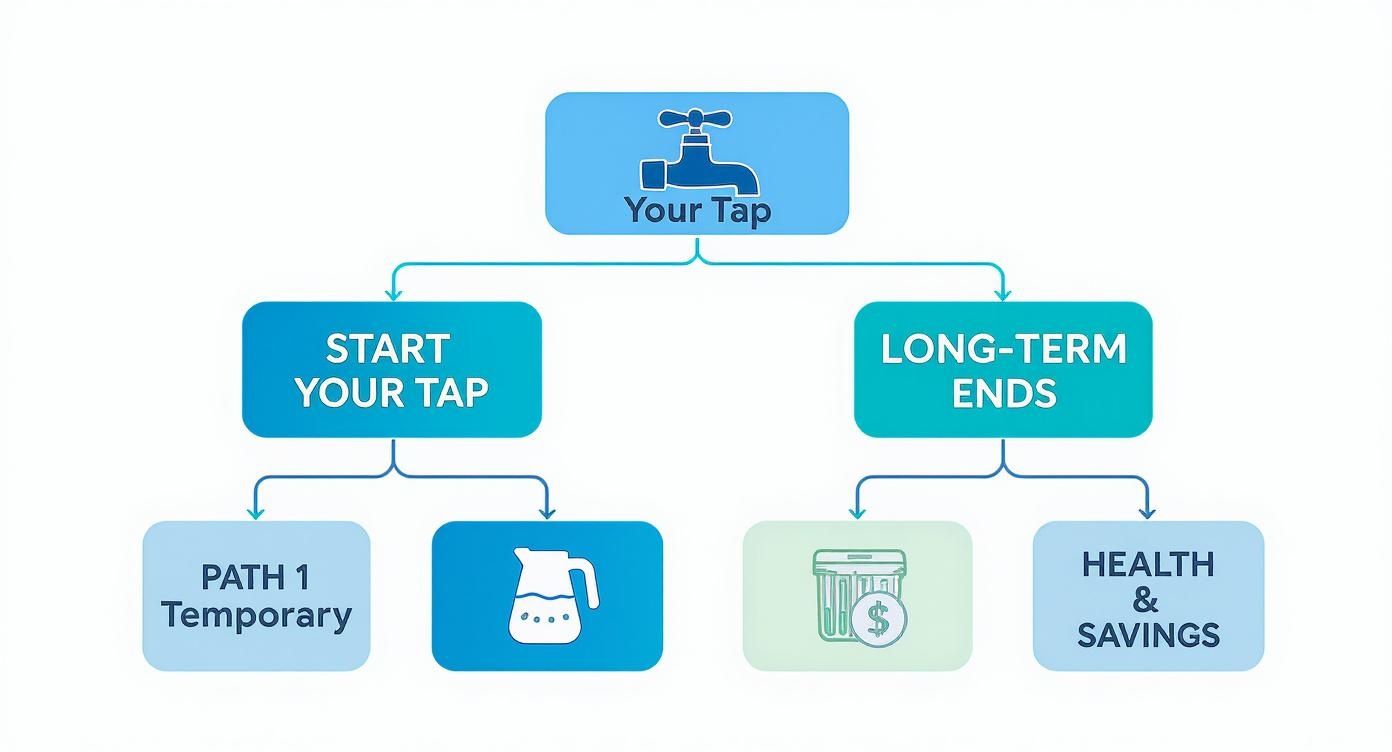
By choosing a dedicated under-sink system, you're not just getting a temporary fix; you're investing in consistently clean and healthy water for your family every single day.
Activated Carbon Filters: The Taste and Odour Specialist
Think of an activated carbon filter as a sort of "chemical sponge." Its surface is covered in millions of microscopic pores that trap and hold onto contaminants through a process called adsorption. This is precisely why it's the undisputed champion for making your water taste and smell great.
- What it removes: It's brilliant at grabbing chlorine, volatile organic compounds (VOCs), pesticides, and herbicides. This is what transforms that "swimming pool" taste of city tap water into something clean and refreshing.
- Best for: It's the perfect solution for anyone in a metro area whose main complaint is the chemical taste from the local water treatment plant.
It’s important to know what it doesn’t do, though. Activated carbon alone won't remove dissolved solids like heavy metals (lead, mercury), fluoride, or tiny microorganisms like bacteria. It’s a specialist, not a cure-all.
Sediment Filters: The System's Bodyguard
Often the very first stage in any good filtration system, the sediment filter is the unsung hero. Its job is straightforward but absolutely vital: it catches all the physical gunk like dirt, rust, sand, and silt before it can get any further.
These filters are rated in microns to show how small a particle they can stop. A 5-micron rating is pretty standard and effective for most homes. To put that in perspective, a single human hair is about 70 microns wide.
When it matters most: If you live in a suburb with old pipes or use rainwater tanks, you’ve probably seen cloudy water after a downpour. A sediment filter stops that grit from ending up in your glass, protecting both your filter system and your family.
Without this first line of defence, finer filters like carbon blocks or reverse osmosis membranes would clog up in no time, losing their effectiveness and costing you more in frequent replacements.
Reverse Osmosis: The Purity Powerhouse
When you want the absolute highest level of purification, you need Reverse Osmosis (RO). This is the gold standard. RO technology uses pressure to force water through a very fine membrane with pores around 0.0001 microns in size, leaving virtually every contaminant behind.
While Australia’s drinking water standards are high, local problems can and do pop up. Some areas in NSW and Queensland, for example, have had issues with PFAS contamination, pushing many households toward more advanced filtration. It’s no surprise that Reverse Osmosis technology leads the domestic water filtration market in Australia—people value its power to remove a massive range of contaminants, from heavy metals and salts to bacteria.
An RO system excels where others fall short, removing things like:
- Heavy Metals: Lead, mercury, arsenic, and chromium.
- Dissolved Solids: Fluoride, nitrates, and salts.
- Microorganisms: Bacteria, viruses, and cysts.
- Emerging Contaminants: Highly effective against things like microplastics and pharmaceuticals.
Of course, there are a couple of trade-offs. The RO process is slower, so water flow from the dedicated tap can be a little less powerful than your main tap. It also creates some wastewater (called brine) to flush the captured contaminants away, and it removes healthy minerals like calcium and magnesium along with the bad stuff.
To get a better handle on what might be lurking in your tap, check out our guide on the 7 everyday toxins hiding in your water and how to filter them out.
Filtration Technology Performance Snapshot
This table gives you a quick overview of how each technology stacks up against common water quality concerns in Australia, helping you pinpoint the best solution for your home.
| Technology Type | Best For Removing | Potential Drawbacks | Ideal Australian Use Case |
|---|---|---|---|
| Activated Carbon | Chlorine, chemicals (pesticides, VOCs), bad tastes, and odours. | Doesn't remove heavy metals, fluoride, or microorganisms. | Metro Homes: Perfect for improving the taste and smell of municipally treated tap water that is already safe to drink. |
| Sediment Filter | Physical particles like rust, dirt, sand, and silt. | Doesn't remove dissolved chemicals, tastes, or microorganisms. | Regional & Older Homes: Essential for homes with older plumbing or those using tank/bore water to prevent clogging. |
| Reverse Osmosis | Over 99% of contaminants, including heavy metals, fluoride, nitrates, bacteria, viruses, and microplastics. | Slower flow rate, produces wastewater, and removes beneficial minerals (can be added back). | Total Peace of Mind: For households wanting the purest possible water, especially if concerned about specific contaminants. |
As you can see, each technology has a clear role to play. That's why the most effective systems don't rely on just one.
Multi-Stage Systems: The Best of All Worlds
In reality, you'll rarely find these technologies used on their own. The best under-sink water filters combine their strengths in a multi-stage system to provide layers of protection.
A really solid system is often set up like this:
- Stage 1: Sediment Filter – Catches all the physical particles first.
- Stage 2: Activated Carbon Pre-Filter – Removes chlorine to protect the delicate RO membrane.
- Stage 3: Reverse Osmosis Membrane – The powerhouse that removes over 99% of contaminants.
- Stage 4: Carbon Post-Filter – A final polish to ensure the water tastes perfectly fresh.
- Stage 5: Remineralisation Filter (Optional but highly recommended) – Adds back healthy minerals like calcium and magnesium for better-tasting, pH-balanced water.
This layered approach means every part of the system is doing its job efficiently. The end result is water that isn’t just pure, but also healthy and great-tasting, giving you complete confidence in every glass.
Evaluating Essential Features and Certifications
Once you’ve settled on the type of filtration you need, it's time to dig into the details. This is where you separate a good filter from a great one—the small but crucial features that define how the system performs day-to-day and its true value over the long haul.
These are the specs that directly impact convenience, running costs, and your confidence in the water you're drinking.
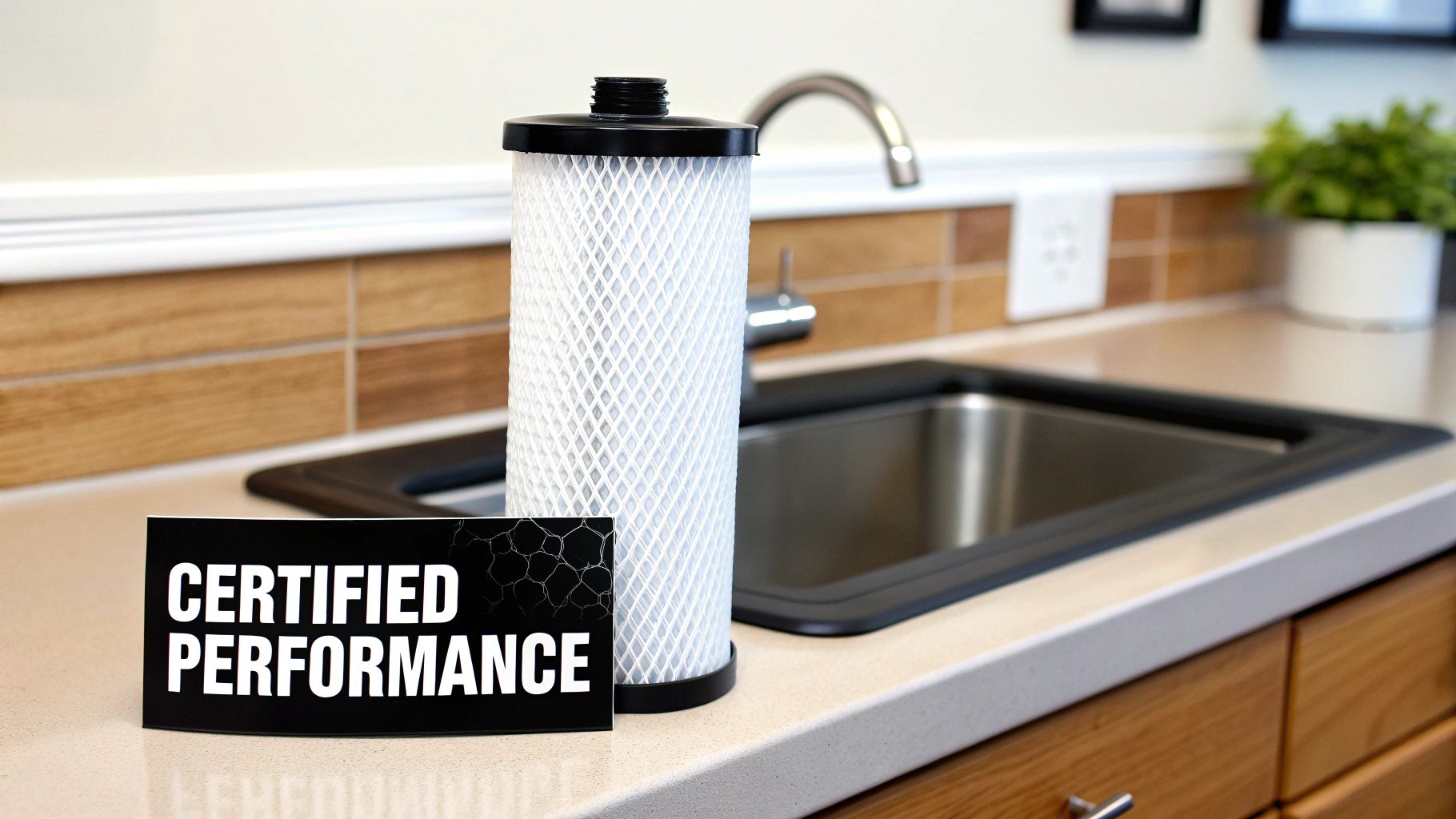
I
t’s tempting to focus on the upfront cost, but the real story is in the total ownership experience. From how often you’re crawling under the sink to change cartridges to the speed at which you can fill a glass, these are the practical things that matter most.
Filter Lifespan and Replacement Costs
A filter’s lifespan is a massive factor in its overall cost and the hassle of keeping it running. A cheap system might look like a bargain, but if you're swapping out cartridges every few months, the costs add up fast. You're looking for that sweet spot between top-tier performance and genuine longevity.
Here's a typical timeline:
- Sediment and Carbon Pre-filters: These guys do the heavy lifting and generally need replacing every 6 to 12 months.
- Reverse Osmosis (RO) Membrane: As the core of an RO system, this is far more durable, often lasting 2 to 4 years.
Before you buy, always calculate the ongoing cost of replacement cartridges. A quality brand will have readily available, reasonably priced replacements, so you aren't caught out with supply issues or eye-watering prices down the track.
Flow Rate: The Litres Per Minute Metric
Flow rate, measured in litres per minute (LPM), is all about how quickly the system delivers your purified water. A slow flow rate is a daily frustration—waiting ages to fill a pot for pasta or even just a glass of water. While a dedicated filter tap will nearly always be a bit slower than your main kitchen tap, it shouldn't feel like a chore.
A decent flow rate is a key sign of quality engineering. Cheaper, less efficient systems often compromise on flow to achieve their filtration claims, so a sluggish trickle can be a red flag.
Why NSF/ANSI Certifications Are Non-Negotiable
If you only check one thing, make it this. NSF/ANSI certifications are your independent, third-party proof that a water filter actually does what it says on the box. Without this seal, you're just taking the manufacturer's marketing claims at face value.
An NSF/ANSI certification isn't just a sticker; it's your guarantee of safety and performance. It confirms the system has been rigorously tested to remove specific contaminants and that its materials won't leach anything harmful back into your water.
Here are the key certifications to look for when choosing the best under-sink water filter for your Australian home:
| Certification | What It Guarantees | Why It Matters for Aussies |
|---|---|---|
| NSF/ANSI 42 | Aesthetic Effects: Confirms the reduction of things like chlorine, taste, and odour. | The must-have standard for improving the taste and smell of chlorinated tap water in our cities. |
| NSF/ANSI 53 | Health Effects: Verifies the removal of specific health-related contaminants, like lead, cysts, and VOCs. | Essential peace of mind, particularly if you live in an area with older plumbing or known contamination risks. |
| NSF/ANSI 58 | Reverse Osmosis Systems: The specific standard for RO systems, ensuring they meet strict criteria for reducing total dissolved solids (TDS). | The gold standard for anyone seeking the absolute highest level of purity from a reverse osmosis unit. |
A quick check for these logos on the packaging or the manufacturer’s website is a simple but vital step toward making a purchase you can trust.
The Importance of Remineralisation
One of the few downsides to powerful filtration methods like reverse osmosis is that they are so effective they strip out everything—including beneficial minerals like calcium and magnesium. The result is exceptionally pure water, but it can taste a bit flat or even slightly acidic.
This is where a remineralisation stage comes into play. It’s usually the final cartridge in the system, designed to add a balanced blend of healthy minerals back into the purified water. This simple step transforms the taste, making it crisp and refreshing, while also raising the water's pH for a more alkaline profile. For many people, it's the final touch that creates perfect drinking water.
Getting it Installed and Keeping it Running
Picking the right under-sink water filter is one thing, but living with it is another. It's easy to get caught up in the specs and features, but the reality of installation and day-to-day upkeep is what really determines if you'll love your system in the long run.
A truly great filter shouldn't just deliver pure water—it should slide into your daily life without becoming a hassle. Let's walk through what you can actually expect, from getting it set up to the simple tasks that keep it performing flawlessly.
DIY vs. Calling a Pro in Australia
The first hurdle for many is installation. Can you do it yourself? While you might be tempted to tackle a simple inline filter, for most proper under-sink systems connecting to your mains, the answer here in Australia is a firm no. You need a licensed plumber.
This isn’t just a friendly suggestion; it’s a legal requirement. Getting a professional on the job ensures a few critical things:
- You're Compliant: The work meets Australian plumbing codes, so everything is done by the book.
- No Nasty Leaks: A plumber will guarantee a secure connection, protecting your kitchen from the nightmare of water damage.
- Your Insurance is Safe: If a leak springs from a DIY job, your home and contents insurance could be voided. It’s a huge risk to take.
Key Insight: Don’t try to save a few dollars by installing it yourself. The initial cost of a plumber is a small price to pay for peace of mind, safety, and ensuring your home insurance remains valid.
What's Involved in Regular Maintenance?
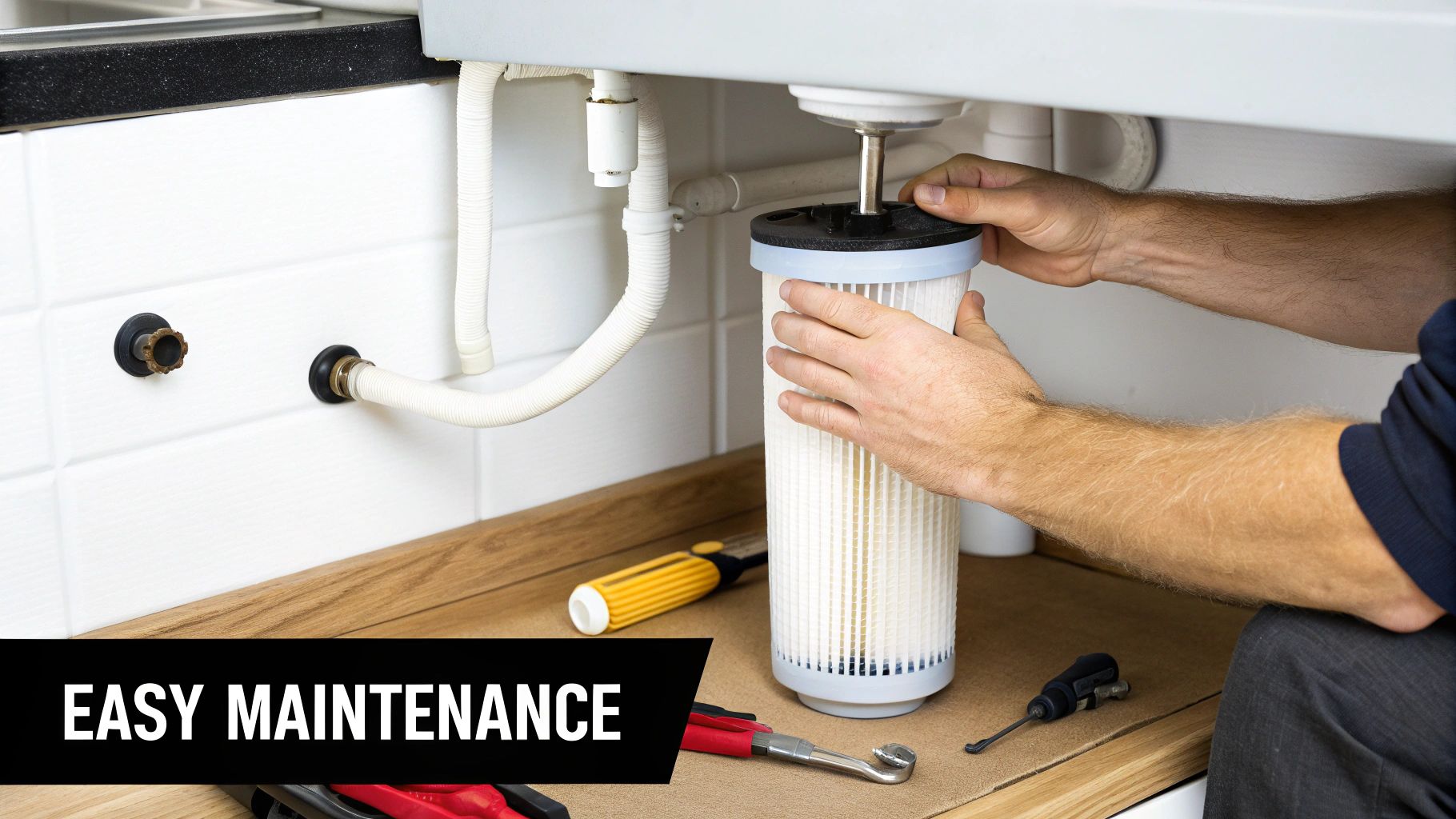
Here’s the good news: keeping your filter in top shape is surprisingly straightforward. Modern systems are designed to be user-friendly, with the main job being a simple cartridge swap every now and then.
The most frequent task is changing the filter cartridges. The exact timing depends on your local water quality and how much your family uses, but here’s a typical schedule:
- Pre-filters (for sediment and carbon): These do the initial heavy lifting. Expect to replace them every 6 to 12 months.
- Reverse Osmosis Membrane: This is the core of an RO system and it’s built to last, usually needing a change only every 2 to 4 years.
Many modern filters now use quick-change cartridges. You just twist the old one off and twist the new one on—no tools, no mess. It's a good idea to give the system a quick sanitise while you're at it to keep everything pristine.
Troubleshooting Common Hiccups
Even the best systems can have an off day. Thankfully, most common issues are minor and have simple fixes you can handle without calling for backup.
Here are a couple of things you might run into:
- Water Flow Suddenly Slows to a Trickle: This is the number one issue we hear about. It’s almost always a sign your filters have done their job and are now clogged with contaminants. A fresh set of cartridges will get the pressure back to normal instantly.
- Hearing Strange Noises: If you've got a reverse osmosis system, a bit of gurgling is perfectly normal as the tank fills and wastewater drains. But if you hear a constant hiss or other new sounds, it might point to a tiny leak or an air pressure issue in the tank. That’s a quick fix for a plumber.
By knowing what to expect with installation and upkeep, you can choose a system that truly works for your home and lifestyle. The right under-sink filter is a low-fuss, high-reward investment that brings beautiful, clean water into your kitchen with minimal effort.
Calculating the True Cost of Ownership
Choosing the right under-sink water filter for your home is more than just another appliance purchase; it's an investment in your family's health. While it's tempting to focus solely on the initial sticker price, the real story is in the true cost of ownership over the system's lifetime. This figure combines the unit's price, installation, and ongoing maintenance.
When you look at the complete picture, you'll often find that a quality filter system is a surprisingly savvy financial move, especially when you compare it to the endless cost of bottled water. Thinking long-term means no nasty surprises down the track and ensures you're getting genuine, lasting value.
Breaking Down the Initial Outlay
Your first expense is the system itself. A basic carbon filter might set you back a couple of hundred dollars, whereas a high-performance, multi-stage reverse osmosis unit could be over a thousand. The price tag reflects the sophistication of the technology, the quality of the components, and the certifications it carries.
Next, you'll need to account for professional installation. As we've covered, Australian regulations are clear: any system connected to the mains water supply needs to be fitted by a licensed plumber. Think of this not as an extra fee, but as an essential part of the setup that guarantees the job is done safely, correctly, and without putting your home insurance at risk.
Annual Running Costs: The Filter Replacements
This is where the real long-term budgeting comes into play. The cost of replacement filter cartridges is, by far, the biggest factor in your system's lifetime expense. It’s a classic trap: a cheap unit with expensive filters that need changing every few months can quickly become a false economy.
Let's run some simple numbers to see how this plays out.
| Cost Component | System A (Basic, Low Upfront) | System B (Premium, Higher Upfront) |
|---|---|---|
| Initial Unit Cost | $250 | $750 |
| Annual Filter Cost | $150 (replace every 6 months) | $120 (replace every 12 months) |
| Total Cost (3 Years) | $250 + ($150 x 3) = $700 | $750 + ($120 x 2) = $990 |
| Total Cost (5 Years) | $250 + ($150 x 5) = $1000 | $750 + ($120 x 4) = $1230 |
You can see that while System A looks like the bargain at first, the cost difference shrinks dramatically over time because of the frequent filter changes. A premium system often delivers better long-term value through more durable components and superior filtration performance.
Key Financial Insight: Always work out the annual replacement cost before you buy. This simple calculation uncovers the true financial commitment and helps you sidestep systems that are cheap to buy but expensive to own.
The Bigger Picture: Filtered vs. Bottled Water
The savings really crystallise when you pit the cost of an under-sink filter against the alternative: buying bottled water. For a family drinking the recommended daily amount, the cost of bottled water can easily run over $1,000 per year.
Suddenly, even a top-tier filtration system can pay for itself within the first year or two. After that, you're enjoying pure, great-tasting water for just cents per litre—the tiny cost of the replacement cartridges. The argument gets even stronger when you factor in the environmental benefits. To dig deeper into this, check out our full breakdown of filtered water vs bottled water and what's actually better.
How Your Local Water Affects Your Budget
One final point: your local water quality has a direct impact on your filter's lifespan and, by extension, your budget.
- Hard Water: If you're in an area with high mineral content, scale can build up and potentially shorten the life of membranes and cartridges.
- High Sediment: Water with a lot of silt or sediment will force your pre-filter to work much harder, meaning you might need to replace it more often than the manufacturer suggests.
Knowing your local water conditions helps you plan for these costs. A quick look at your local council's water quality report can give you some valuable intel, allowing you to choose a system tough enough for your area and budget for maintenance with your eyes open.
Got Questions About Under Sink Filters? We’ve Got Answers.
Deciding to get an under-sink water filter is a great step, but it naturally brings up a few practical questions. To help you feel completely confident in your choice, we’ve put together clear, straightforward answers to the queries we hear most often from Aussie homeowners.
We'll cover everything from who can install it to how it performs day-to-day. Getting these details sorted now means no surprises later, just the simple enjoyment of clean, great-tasting water on tap.
Do I Legally Need a Plumber for Installation in Australia?
Yes, you absolutely do. For pretty much any under-sink system that connects directly to your mains water, Australian plumbing regulations mandate that a licensed plumber must do the job. This isn't just a friendly suggestion—it's a legal requirement to protect your home.
Hiring a professional plumber guarantees a few critical things:
- Compliance: You’ll know the job meets all national and local plumbing codes.
- Leak Prevention: A pro install is secure, preventing the kind of water damage under a sink that can turn into a nightmare.
- Insurance Validity: If a DIY job springs a leak, your home and contents insurance policy could be voided, leaving you with the entire bill for repairs.
While it's an extra cost upfront, it’s a non-negotiable for safety and genuine peace of mind.
How Often Will I Need to Replace the Filter Cartridges?
This really depends on your specific system and how hard it has to work with your local water, but there's a good rule of thumb. The workhorse filters, like your sediment and activated carbon cartridges, generally need swapping out every 6 to 12 months.
The heart of a more advanced setup, like a reverse osmosis membrane, is much more durable. These typically last anywhere from 2 to 4 years. Always refer back to the manufacturer's guidelines for your specific model—that’s your best guide for keeping everything running perfectly.
When you're weighing up different systems, don't forget to factor in the long-term cost and availability of replacement cartridges. It’s a huge part of the true cost of ownership.
Will a Water Filter Noticeably Reduce My Water Pressure?
It's normal to notice that the flow from your dedicated filter tap is a bit gentler than your main kitchen tap. After all, the water is being pushed through several dense layers to get it pure. A well-designed, quality system, however, keeps this difference minimal so it won't be a daily frustration.
The biggest giveaway that it's time for a filter change is a sudden, significant drop in pressure. That’s the clearest sign your cartridges have done their job and are now full of the gunk they've captured. A quick cartridge swap will almost always get the flow back to normal straight away.
Does Reverse Osmosis Remove the Good Minerals from Water?
Yes, it does. Reverse osmosis is incredibly thorough by design, stripping out nearly all total dissolved solids (TDS). This is great for removing contaminants like heavy metals and fluoride, but it also takes out beneficial minerals like calcium and magnesium.
To get around this, many of the best under-sink systems in Australia now come with a remineralisation stage. This last step adds a balanced amount of these healthy minerals back into the purified water. It doesn't just improve the health profile of the water; it dramatically improves the taste, giving it that crisp, refreshing quality you're after.
Ready to upgrade to pure, great-tasting water on tap? Explore the full range of science-backed hydration solutions at HolyH2O™ and discover why over 100,000 Aussies trust us for their home water filtration needs. Find your perfect system today.
Article created using Outrank