


Water Filter Sustainability Best Practices: How to Filter Smart and Actually Reduce Your Impact
Most people assume that buying a water filter automatically makes them more eco-friendly. That assumption is where real sustainability gets lost. Some filters waste significant water in the filtration process, strip beneficial minerals your body needs, and end up in landfill after just a few months. Getting clean, safe drinking water and genuinely reducing your environmental footprint requires a specific approach — starting with matching the right filter to your actual water quality, not the worst-case scenario on the box.
The most sustainable filter is the one matched to your actual water quality, maintained on schedule, and paired with a system designed to last. For most Australian households, that means a gravity-fed benchtop filter like the Trinity — zero energy, broad-spectrum contaminant removal including fluoride, and cartridges that last 6–12 months. The purchase decision is 30% of the sustainability story. How you maintain it is the other 70%.
📋 Table of Contents
How to Evaluate Water Filter Sustainability — The Real Criteria
Sustainable water filtration is not about which product has the greenest marketing. It comes down to measurable factors you can evaluate before you spend anything. Here is the framework that actually matters:
- Match to your actual water quality. A filter that removes 50 contaminants you don't have is not more sustainable than one targeting the three you actually need removed. Specificity reduces waste, energy, and cost. Get your local water utility's annual quality report before buying anything.
- Filter lifespan and recyclability. A cartridge that lasts longer per litre of water treated creates less manufacturing waste. Membrane upcycling research shows end-of-life handling can reduce environmental costs by up to 99.9% — which tells you how much cartridge disposal choices matter.
- Energy use during operation. Reverse osmosis requires water pressure; some UV systems use continuous electricity. Gravity-fed and ceramic filters use zero energy — which matters for your ongoing carbon footprint, not just the upfront purchase.
- The over-filtering problem. Excess filtration removes beneficial minerals like calcium and magnesium that your body relies on, creates unnecessary environmental load, and costs you more money for no health benefit. More stages is not always better.
- Maintenance discipline. A filter you forget to change is not a sustainability win — it's a contamination risk. The best filter is one you will actually maintain, not the one with the most impressive spec sheet.
✅ Start here: Check your state water utility's annual quality report before buying any filter. It's free, publicly available online, and tells you exactly which contaminants are present in your supply — so you buy only the filtration you actually need.
Sustainable Filter Types Compared
Not all eco-friendly water filtration options are equal. Here is how the main technologies compare across the criteria that actually drive sustainability:
| Filter Type | Carbon Footprint | Filter Lifespan | Contaminants Removed | Energy Use | Recyclability |
|---|---|---|---|---|---|
| Trinity (gravity benchtop) | Very low | 6–12 months per stage | Fluoride, chlorine, chloramine, heavy metals, bacteria, microplastics | None | Cartridge recycling available |
| Activated carbon (jug/pitcher) | Low | 2–3 months | Chlorine, VOCs, taste/odour — not fluoride | None | Growing programs |
| Ceramic | Very low | 12+ months (cleanable) | Bacteria, sediment — not chemicals | None | High |
| Reverse osmosis | Low to moderate | 6–24 months | Very broad — fluoride, nitrates, PFAS, heavy metals | Moderate + wastewater | Moderate |
| HydroWand (portable) | Very low | Replaces ~400 single-use bottles per cartridge | Broad incl. bacteria, microplastics | None | Improving |
| UV purification | Low | Lamp yearly | Microbial only — not chemicals or fluoride | Continuous electricity | Limited |
| Bottled water | 3,500× higher than tap | Single use | Varies by brand | Full supply chain | Mostly landfill |
Gravity-fed benchtop filters — the sustainability benchmark
Gravity-fed filters like the Trinity use zero electricity — water passes through filter stages under its own weight. Combined with broad-spectrum contaminant removal (including fluoride, which standard carbon filters cannot touch), a long cartridge life, and no wastewater produced, gravity-fed benchtop units deliver the best environmental efficiency of any filter type available for home use.
Activated carbon — effective but limited for Australian water
Standard activated carbon handles chlorine, VOCs, and taste compounds well at very low energy cost. The limitation for Australian households is fluoride: carbon surface chemistry does not bind fluoride ions. If you're in Sydney (1.0 mg/L), Melbourne, or any other fluoridated city and fluoride is a concern, carbon-only filtration is not sufficient — regardless of how many stages it has.
Reverse osmosis — right tool for specific problems
RO removes the widest range of contaminants and is the correct choice for households with well water, nitrate concerns, or PFAS contamination. The environmental trade-offs — wastewater produced during filtration, under-sink installation, and mineral stripping — mean it's not the most sustainable choice when a simpler system would do the job. If you run RO, add a remineralization stage to restore calcium and magnesium your body needs.
⚠️ The neglected filter problem: A filter cartridge past its replacement date does not just stop working well — it can harbour bacterial growth and deliver water worse than unfiltered tap water. Set a calendar reminder tied to your household's actual consumption before you install anything.
Maintenance and Recycling Best Practices
Buying a sustainable filter is step one. What you do after that determines whether it stays sustainable over time — or quietly becomes a source of unnecessary waste and contamination risk.
- Replace based on volume, not just time. Filter lifespan depends on how much water passes through it. A family of four will exhaust a cartridge 30–40% faster than a single-person household. Track your usage and follow volume-based guidelines, not just the calendar estimate on the box.
- Clean your ceramic dome monthly. A quick scrub under running water extends ceramic dome life significantly and maintains flow rate. Trinity's ceramic dome is cleanable and reusable — this single habit dramatically reduces how often you need to replace it.
- Clean your filter housing regularly. Bacteria can colonise filter housings, particularly in warm Australian climates. Rinse and inspect the housing every time you replace a cartridge.
- Recycle cartridges through manufacturer programs. Many filter brands now offer take-back programs. Some activated carbon cartridges can be composted or sent back for reprocessing. Check the brand's website before disposing of used cartridges in general waste.
- Buy cartridges in bulk. Consolidated shipping reduces per-unit delivery emissions and ensures you always have a replacement before the current cartridge expires — preventing the "run it past its date" habit that creates both contamination risk and waste.
- Pair your filter with glass or stainless steel containers. Your filter removes contaminants from the water. Your container choice determines whether you undo that work by introducing secondary plastic leaching or generating single-use bottle waste every day.
- Don't run RO when you don't need it. Running a six-stage RO system when your water only requires a two-stage gravity filter wastes energy and water every single day it operates. The most sustainable system is the minimum specification that addresses your actual water quality concerns.
A quality home filter system costs a fraction of a year's bottled water spending. Trinity's annual cartridge cost is typically less than what most Australian households spend on bottled water in a single month. When you calculate cost per litre over the cartridge's full lifespan — rather than just the upfront price — sustainable filtration wins decisively on both environmental and financial grounds.
Which Filter Is Right for Your Situation
Sustainable water filtration is not one-size-fits-all. Your water quality, living situation, and household size all shape what the right choice actually looks like:
Renters / no plumbing changes: Gravity-fed benchtop filter (Trinity). Full spectrum filtration including fluoride, zero installation, zero landlord permission required. Moves with you.
On-the-go / travel / commuting: HydroWand portable filter bottle. Replaces up to 400 single-use plastic bottles per cartridge. One of the fastest sustainability wins available — no more buying single-use bottles at airports, cafes, or the office.
Households with young children or formula-fed infants: Fluoride-specific filtration is the priority. Standard carbon filters don't remove fluoride. Trinity's activated alumina and KDF blend reduces fluoride by up to 90% — the critical specification for families in fluoridated cities.
Well water or specific contamination (nitrates, PFAS): Reverse osmosis. It's the only point-of-use technology that reliably handles nitrates and PFAS. Pair with a remineralization stage to restore beneficial minerals.
Households where tap water already scores well: If your water report shows only mild chlorine and no elevated contaminants, a simple benchtop carbon filter is the most sustainable choice. Running RO when you don't need it adds environmental cost without benefit.
Why Trinity Is the Right Choice for Most Australian Households
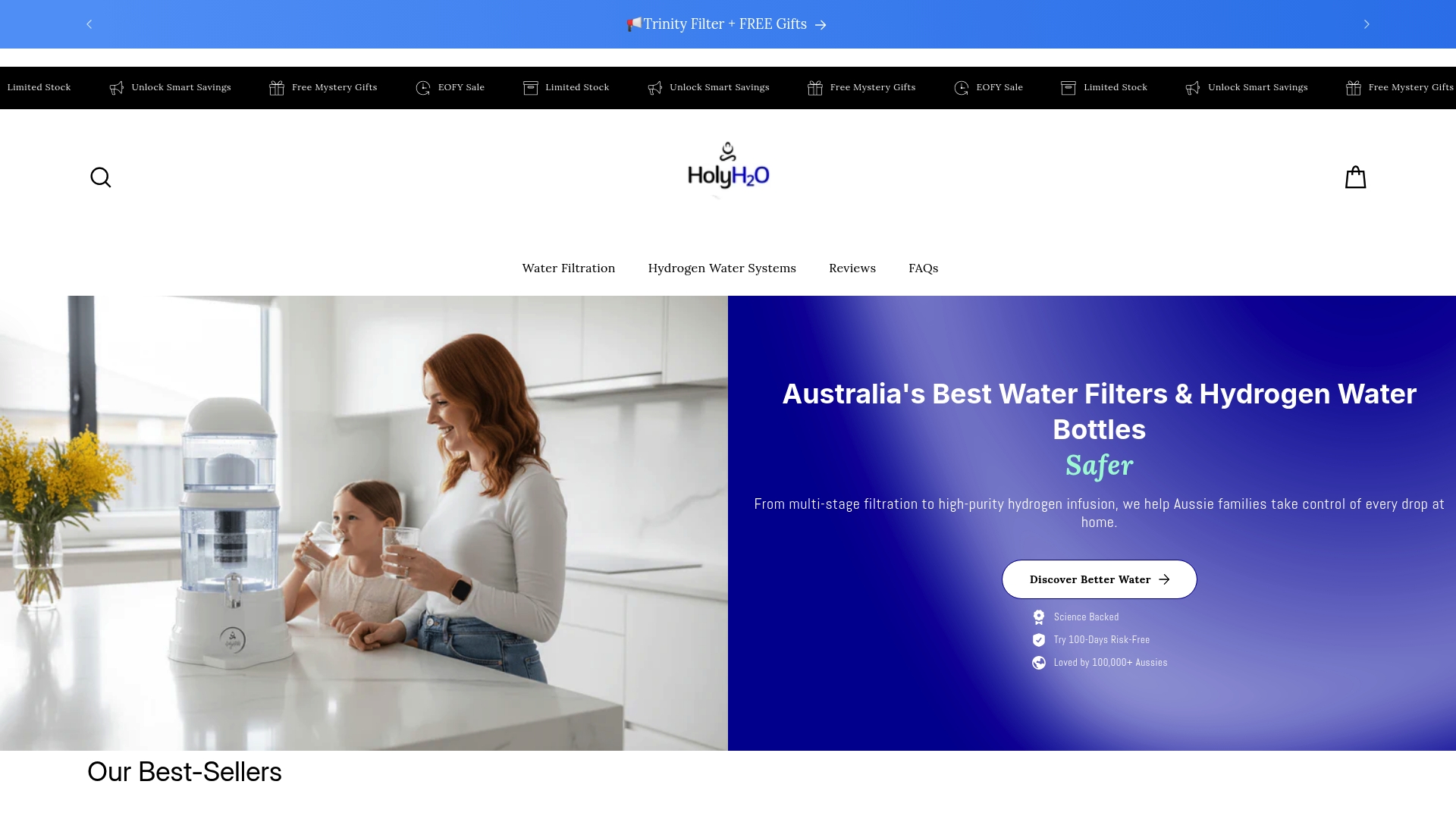
Trinity Fluoride Filter — Best for Most Australian Households
Trinity is the only gravity-fed benchtop filter in Australia that removes fluoride, chlorine, chloramine, heavy metals, bacteria, and microplastics in a single unit — with zero power and zero plumbing. Its activated alumina and proprietary KDF blend delivers up to 90% fluoride reduction. Stage 3 mineral stones restore calcium, magnesium, and potassium — directly solving the over-filtering problem that affects RO systems. Cartridges last 6–12 months and are available for consolidated bulk ordering to reduce delivery emissions.
- Up to 90% fluoride removal — activated alumina + proprietary KDF blend
- Removes chlorine, chloramine, lead, mercury, cadmium, arsenic
- Ceramic dome filters bacteria, microplastics, rust, cysts — cleanable monthly
- Mineral stones restore calcium, magnesium, potassium — no mineral stripping
- Zero energy — gravity-fed, no pump, no power, no running cost
- No plumbing, no installation — renter-friendly, moves with you
- Lifetime filter guarantee + free Australian delivery
Frequently Asked Questions
A truly sustainable filter is matched to your actual water quality (not over-specified), uses minimal or zero energy during operation, has a long cartridge lifespan, and is maintained on schedule. Sustainability is not determined by the marketing — it's determined by how well the filter fits your specific supply, and how consistently you replace cartridges and recycle them.
Replace based on volume filtered, not just calendar time. A family of four will exhaust a cartridge 30–40% faster than the manufacturer's estimate, which is typically based on single-person usage. For Trinity specifically: the activated alumina and KDF cartridge (Stage 2) runs every 6–8 months; the ceramic dome (Stage 1) and mineral stones (Stage 3) are replaced annually. Set a calendar reminder when you install each fresh cartridge.
Yes — many manufacturers now offer take-back or recycling programs for used cartridges. Some activated carbon media can be composted; certain membrane types can be reprocessed. Check your brand's website before disposing of cartridges in general waste. Research shows that proper end-of-life handling can reduce a filter's environmental costs by up to 99.9%.
RO has a relatively low carbon footprint compared to bottled water and is the right choice for households with well water, nitrate contamination, or PFAS concerns. For most Australian city households — where the primary concerns are fluoride, chlorine, and heavy metals — a gravity-fed benchtop filter is the more sustainable choice: zero energy, no wastewater, no mineral stripping.
Yes. Excessive filtration — particularly through RO without a remineralization stage — removes calcium, magnesium, and potassium that your body needs from drinking water. It also adds unnecessary energy use, wastewater production, and cartridge replacement cost. Trinity's Stage 3 mineral stones directly address this by restoring beneficial minerals after filtration.
Match the certification to your specific water concern — not the highest number available. NSF/ANSI 42 covers taste and odour (chlorine). NSF/ANSI 53 covers health contaminants including lead. NSF/ANSI 58 applies to reverse osmosis systems. Buying a filter certified for contaminants you don't have adds cost and environmental load with no benefit.
Yes — one of the best available. The HydroWand replaces up to 400 single-use plastic bottles per cartridge, uses no energy, and eliminates single-use plastic at every trip away from home. For anyone who regularly buys bottled water while commuting, travelling, or at the office, a portable filter bottle is one of the highest-leverage sustainability switches you can make.
Filter Smarter. Waste Less. Start Today.
Trinity uses zero energy, removes fluoride up to 90%, and restores beneficial minerals other filters strip away. The HydroWand eliminates single-use plastic every time you leave home. Over 100,000 Australian households have already made the switch.
Shop Trinity Shop HydroWandMore from the HolyH₂O Hydration Guide
This article is intended for general informational purposes. Always check your local water utility's annual quality report to determine which contaminants are present in your supply before selecting a filtration system. For health concerns related to specific contaminants, consult a qualified health professional.